|
Catalog of Beneficials
Mealybug, Scale, and Whitefly Control
Also
see Lacewing a
general predator.
For
Bulletins on how to use each of these insects in a biocontrol program see Bulletins.
|
Mealybug Biocontrols - Several
releases of Cryptolaemus or green lacewing may be needed especially in winter.
"Crypts" are suggested for high levels and in warm, humid conditions and
lacewing for more varied conditions. Where "Crypts" are attracted away from
plants to skylights and windows, lacewing are better. Lindorus eat mealybug, but need
scale to reproduce. |
Reduce high levels of
mealybug with predators followed by wasps or begin biocontrol with Beauveria (Naturalis)
or Neem oil before releasing biocontrol agents. Hb nematodes attack root mealybug in soil.
Remove ant interference if present.
|
| BENEFICIAL |
TARGET PEST |
RATE/FREQ |
CODE |
QUANTITY |
PRICE |
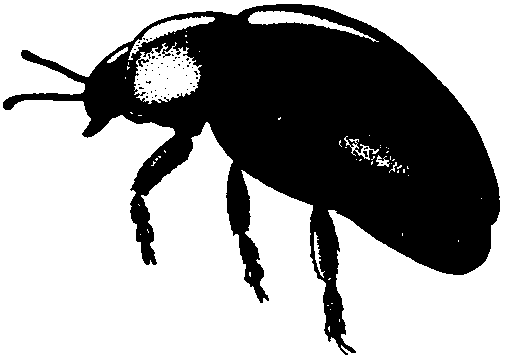
| Cryptolaemus montrouzieri
Mealybug Destroyer
predatory beetle
prefers 60-90° F, 70-80% RH
|
mealybug,
scale, aphid, adult & larvae both feed on all stages of mealybug, larva looks like a
giant mealybug,
do not refrigerate, hold at room temp. or 50° F |
5/plant 2-5/sq yd
1K-2K/acre
1-2 X, inoc
|
CR100
100/bag |
1 bag |
55.00 |
| 2+ bags |
48.00 |
| 5+ bags |
38.00 |
CR250
250/bag |
1 bag |
98.00 |
| 2+ bags |
89.00 |
| 5+ bags |
80.00 |
CR500
500/bag |
1 bag |
169.00 |
| 2+ bags |
158.00 |
| 5+ bags |
150.00 |
|
SCALE BIOCONTROLS – Lindorus lopanthae and green
lacewing favor soft scale if not too sticky. Cybocephalus is
more specialized for certain scale. Cryptolaemus eat scale,
but need mealybug to lay eggs. Aphytis melinus attacks certain armored scale, but may not attack all species in a family. Use of appropriate species in sufficient numbers in regular releases can suppress or control infestations in two to three months. Then, one to three releases per year should maintain control. Hot Pepper Wax sprays may help clean up some scale problems.
|
| BENEFICIAL |
TARGET PEST |
RATE/FREQ |
CODE |
QUANTITY |
PRICE |
| Aphytis melinus Golden Chalcid
parasitic wasp
parsitizes 2nd, 3rd instar female, 2nd, pre pupal
male, host feeds other stages
|
Armored
scale, California red, citrus red, oleander, San Jose, ivy, walnut, Dytyospermum, and
citrus yellow scale |
5K-10K/acre 1-2/sq ft GH
5-10/plant
1 wk I, 3 X |
AP5 |
5,000/cup |
34.00 |
| 2+ cups |
25.00 |
| 5+ cups |
19.00 |
| AP10 |
10,000/cup |
48.00 |
| 2+ cups |
39.00 |
| 5+ cups |
32.00 |
| AP25 |
25,000/cup |
79.00 |
| 2+ cups |
70.50 |
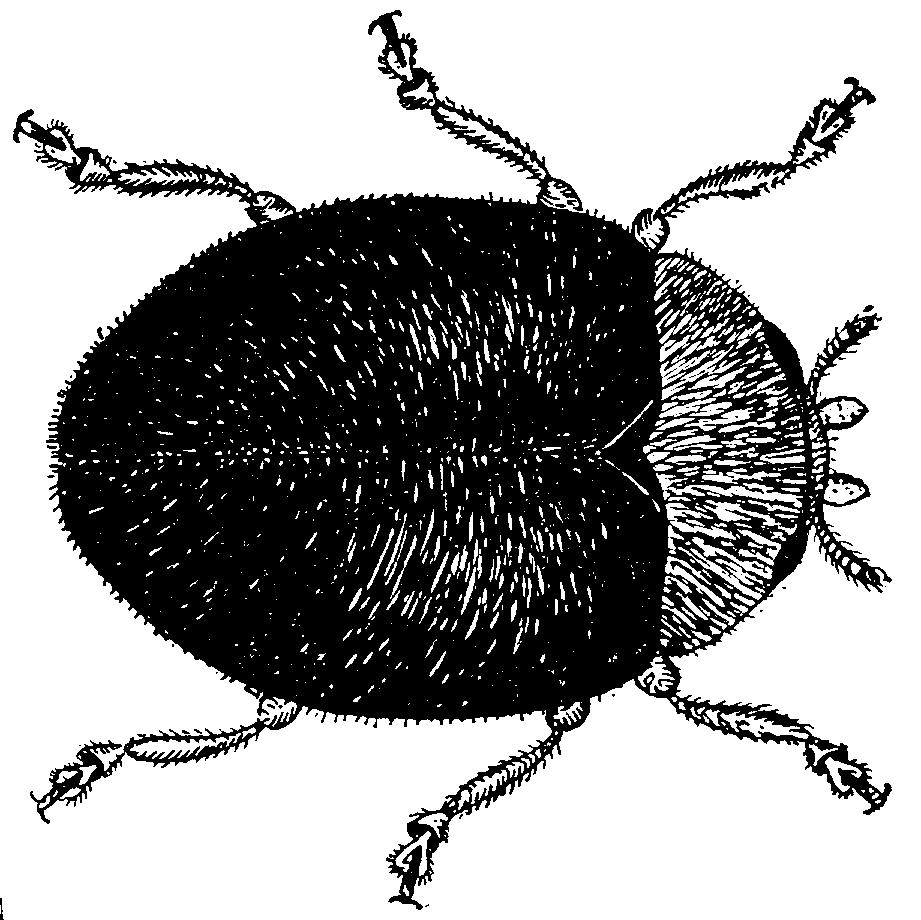
| Lindorus lopanthae ( also known as Rhyzobius lopanthae)
Scale Destroyer
predatory beetle
|
hard
scale soft scale until honey-
dew forms, will eat some mealybug, other small insects,
prefers 60-77° F, 20-90% RH
larvae, adult both predators
|
3-5/plant 20-40/tree
1-2 K/acre
3 wk I, 2 X
3-6/10 sq ft GH
|
LIN25 |
25/vial |
36.00 |
| 2+ vials |
27.00 |
| 5+ vials |
12.00 |
| LIN50 |
50/vial |
48.00 |
| 2+ vials |
39.00 |
| 5+ vials |
30.00 |
| LIN100 |
100/vial |
64.00 |
| 2+ vials |
59.00 |
| 5+ vials |
54.00 |
| LIN250 |
250/vial |
115.00 |
| 2+ vials |
105.00 |
Whitefly Biocontrols – General predators used
most are Delphastus and green lacewing. Delphastus is introduced early in
hot spots. Inoculative releases take 3 weeks to turn a generation that yields 100 times
more beetles. Unlike lacewing, Delphastus don’t eat parasitized whitefly. Lacewing
are more affordable in inundative numbers in regular releases or to maintain control of
other pests besides whitefly. Encarsia formosa does best against Greenhouse whitefly
(GHWF), Trialeurodes vaporariorum and will attack Bemesia (silverleaf or sweet
potato whitefly). |
Eretmocerus
does best against Bemesia, woolly, citrus and bayberry whitefly, and will parasitize GHWF.
GHWF adults are white, wings together parallel to leaf surface. Bemesia adults are yellow,
wings slightly apart showing abdomen and at an angle to leaf surface. A fringe rings the
edge of white GHWF nymphs and no eye spots are visible; Bemesia nymphs are yellow with no
fringe, but eye spots are visible. GHWF lays eggs in circular patterns while Bemesia lays
its eggs singly. High populations may need to be reduced with Beauveria (Naturalis), soap
(Dr. Bronner’s), neem, or Hot Pepper Wax before introducing biocontrols.
|
| BENEFICIAL |
TARGET PEST |
RATE/FREQ |
CODE |
QUANTITY |
PRICE |
| Delphastus catalinae (=D. pusillus)
Whitefly Predator
predatory beetle
no diapause active >54º F (12º C)
|
whitefly
- for high WF density 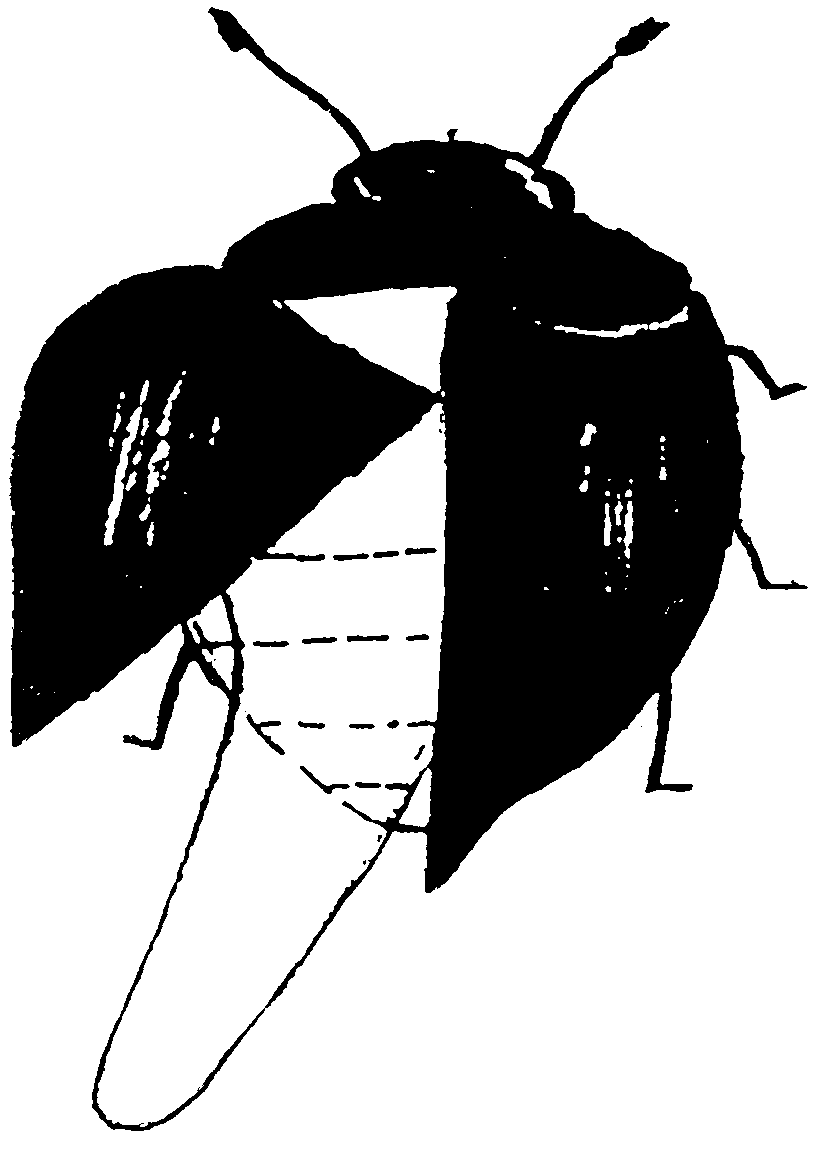
|
1-2/100
sq ft
1 X inoc
|
DE100 |
100/bottle |
52.00 |
| 2+ bottles |
47.00 |
| DE1K |
1,000/bottle |
185.00 |
| 2+
bottles |
177.00 |
| Encarsia formosa Greenhouse Whitefly (GHWF)
Parasite
parasitic wasp
strip = 10 units of 100 parasitized scale glued on perforated cards with hooks
yields 1K parasitic wasps
no diapause, inactive < 54º F (12º C)
loose parasitized scale in increments of 1,000, better distribution than with
strips
|
Greenhouse
whitefly (WF), attacks 2nd instar proactive 8 to 10
weeks covers susceptible stage
silverleaf WF less preferred host
low pest density only
|
1-5/10
sq ft
1 wk I, 4-6 X
2-4/ sq ft GH
8/ tom.plant
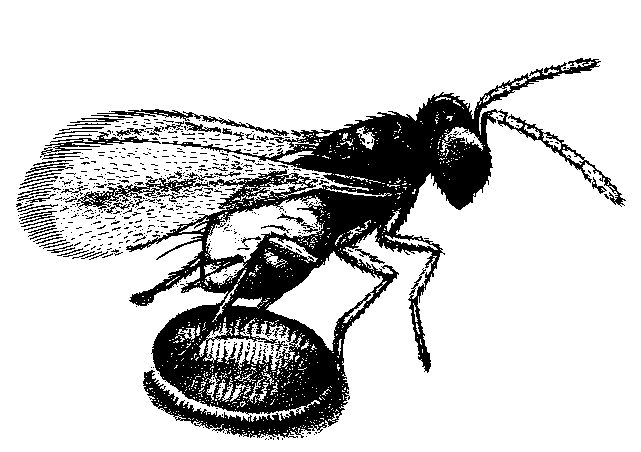
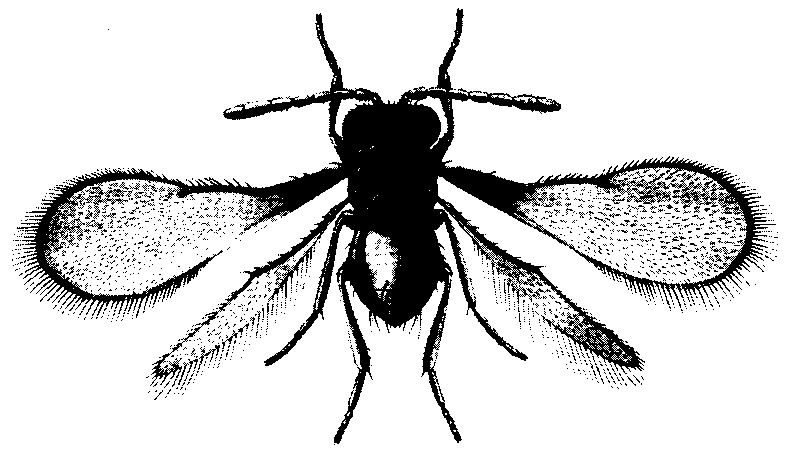
drawing CA-DPR
|
EN1
1,000 pupae/strip of 10 cards (100 wasps per 10 cards) |
1 strip |
29.00 |
| 2+ strips |
19.00 |
EN10K
10,000 pupae/strip of 100 cards (100 wasps per 100 cards) |
1 strip |
72.00 |
EN15K
15,000 pupae/strip of 100 cards (150 wasps per 100 cards) |
1 strip |
110.5 |
| 2+ strips |
99.00
|
ENBULK
loose scale in bulk minimum 5,000 or 1 ml |
5K+ (1 ml) |
29.00/K |
| 10K+ (2 ml) |
19.00/K |
| 100K+ (3 ml) |
14.00/K |
| Eretmocerus californicus (=E. eremicus)
Bemesia Parasite,
parasitic wasp
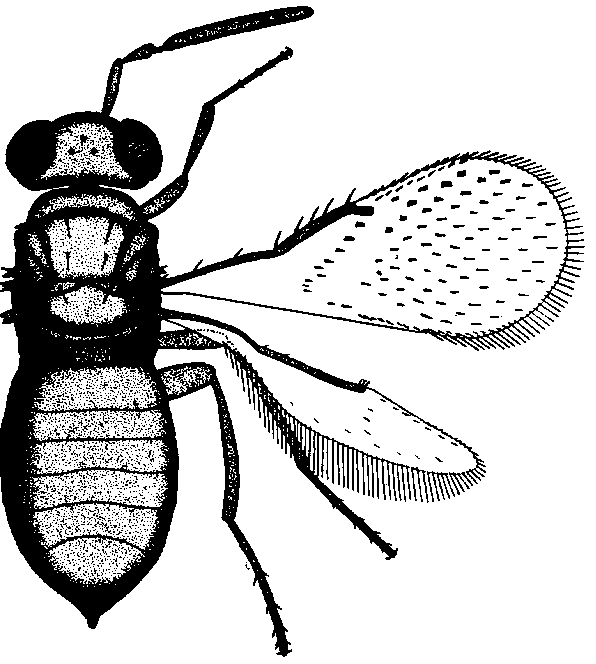
Eretmocerus (ER) cards
16 separate blister-pack cards each with 500 parasitized scale
yields 8K parasitic wasps
|
silverleaf,
sweet potato whitefly (Bemesia), woolly, citrus, bayberry, lesser extent greenhouse
whitefly for low pest density
use proactively for 4 to 10 weeks--covers susceptible larval stage
|
5-20/10
ft2
|
ERCD5 50 cards, 100 pupae/card, 5K total
|
5,000/card |
65.00 |
| 5+ cards |
54.00 |
| 10+ cards |
47.00 |
ERCD10
100 cards, 100 pupae/card, 10K total
|
10,000/card |
109.00 |
| 2+ cards |
89.00 |
|
ERCD15
150 cards, 100 pupae/card, 15K total
|
15,000/card |
135.00 |
| 2+ cards |
123.00 |
Encarsia/Eretmocerus, Eretmocerus eremicus & Encarsia formosa together |
for mixed greenhouse and sweet potato whitefly 2nd to 4th instar larvae |
|
ENER3-B
set of 30 cards , 100 pupae/card, 3K total |
3,000/set |
68.00 |
| 2+ sets |
58.00 |
ENER5-B
set of 50 cards , 100 pupae/card, 5K total |
5,000/set |
62.50 |
| 2+ sets |
50.80 |
ENER10-B
set of 100 cards, 100 pupae/card, 10K total |
10,000/set |
94.00 |
ENER15-B
set of 150 cards, 100 pupae/card, 15K total |
15,000/set |
124.00 |
| 2+ sets |
113.00 |
ENERCD
40 blister packs, 250 pupae/blister, with bran, 10K total |
10,000/set |
115.00 |
| 2+ sets |
108 |
Aphid Biocontrol
Mealybug, Scale and Whitefly Biocontrol
Mite and Thrips Biocontrol
Caterpillar (Moth) Biocontrol
Fly Control
Leafminer and etc Biocontrol
Updated February, 2026
|